
For The First Time
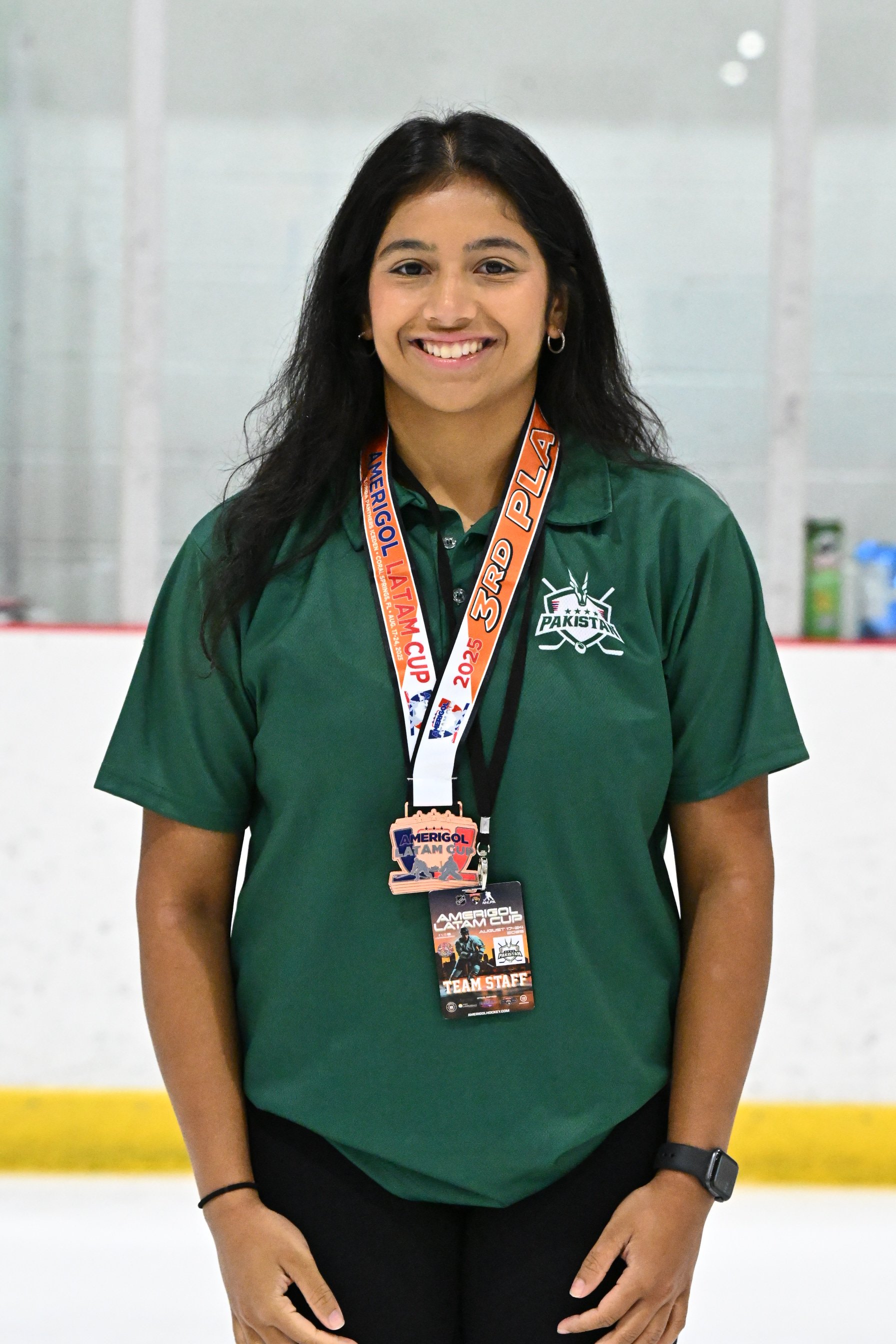
How Mariya Rauf helped build Pakistan’s first women’s national ice hockey team—and why winning the bronze medal was only part of the story.
The locker room was loud with laughter, hugs, and the clinking of bronze medals as Pakistan’s women’s national ice hockey team celebrated its historic finish at the 2025 Amerigol LATAM Cup. Teammates with different nationalities and hockey backgrounds—many of them strangers only days earlier.
Players posed for photos, families exchanged congratulations, and the reality of what they had accomplished began to sink in. But amid the celebration, head coach Mariya Rauf found herself thinking about something else entirely—her younger self.
Growing up, she was often the only brown girl on her hockey team. She loved the sport, but there were moments when she felt different, where she wondered whether there was truly a place for someone like her in hockey.
Now, for the first time, she was standing in a room full of women who understood that experience.
“I kept picturing little me walking into a rink and seeing a team like this,” Rauf said. “Seeing women who looked like her, shared her heritage, and loved the same sport. I think she would have been so excited and so proud.”
For Rauf, that realization carried just as much weight as the medal itself.
From Player to Leader
Long before she was coaching Team Pakistan, Rauf was a young girl trying to find her way into the sport.
Having spent years navigating organized hockey spaces where she was often one of the few South Asian players in the room, she understood firsthand the importance of representation and belonging.
Today, Rauf serves as captain of the Yale Bulldogs women’s hockey team, a role she describes as one of the greatest honors of her career because it was earned through the trust of her teammates.
“Leadership is not about having a title,” she said. “It’s about showing up consistently, putting the team first, and doing whatever you can to help the people around you succeed.”
When she was asked to help lead Pakistan’s first women’s national team, that philosophy became the foundation for coaching Team Pakistan and everything that followed.
Building Something That Never Existed Before
Creating a national team is difficult under any circumstances. Building one from scratch is something else entirely.
The roster brought together players from different countries and different levels of hockey. Many met for the first time when they arrived at the tournament in Florida.
Most teams spend months, or even years, developing chemistry. Pakistan had days.
“There were a lot of unknowns,” Rauf said. “Nobody really knew what to expect.”
What surprised her was how quickly those uncertainties disappeared.
Almost immediately, players bought into a shared purpose. Representing Pakistan became bigger than individual backgrounds, skill levels, or experience. By the end of the tournament, strangers had become teammates, and teammates had become friends.
“By the end of the week it felt like a completely different group,” Rauf said. “The players had formed friendships, built trust, and genuinely cared about one another.”
The transformation helped propel Pakistan to a bronze medal in its international debut, a remarkable achievement for a team with a short bench and virtually no history together.
The Other Half of the Bench
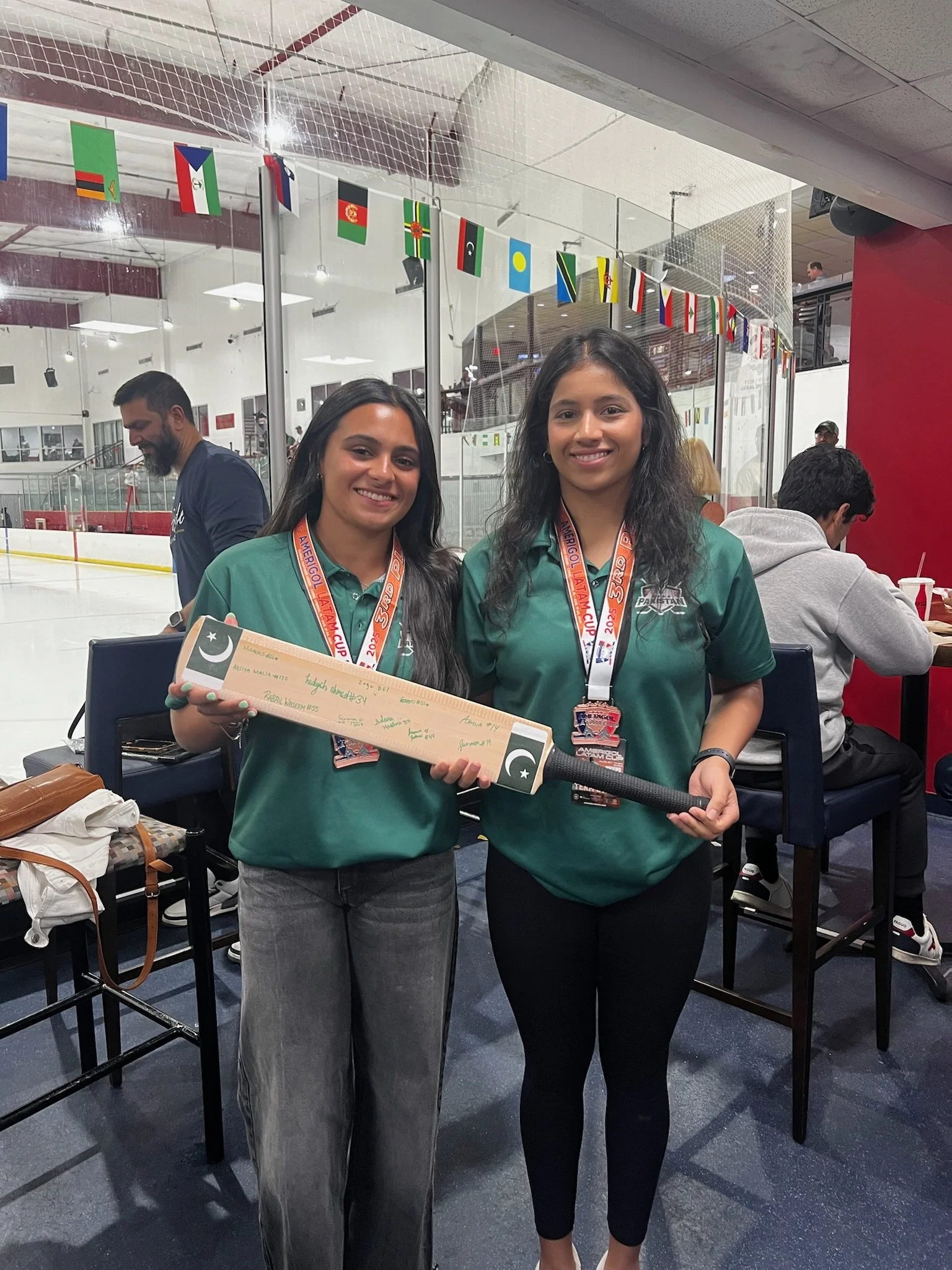
Head coach of the Pakistani women’s ice hockey team, Mariya Rauf (right), and assistant general manager, Riley Khan, pose with a cricket bat signed by their players after winning bronze at the 2025 Amerigol Latam Cup in Coral Springs, Fla.
Rauf was not building the program alone.
Alongside her was assistant coach and assistant general manager Riley Khan. As the daughter of Team Pakistan founder Donny Khan, she had a unique connection to the organization, but her role in building the women’s program extended far beyond her family ties.
According to Rauf, Khan was one of the earliest believers in the vision for a Pakistani women’s national team and became an essential part of making that vision a reality.
Whether supporting players, helping with logistics, or handling countless behind-the-scenes responsibilities, Khan helped create the environment the coaching staff wanted players to experience.
“What I appreciated most was that we shared the same goal,” Rauf said. “We both wanted to create an environment where players felt valued and proud to represent their heritage.”
Their shared mission became one of the defining characteristics of the program.
More Than a Medal
For Rauf, the significance of the tournament extends far beyond a podium finish.
The bronze medal marked a successful debut, but it also represented something larger: visibility.
For years, many of the women on the roster experienced hockey as one of the few people in the room who looked like them. At the LATAM Cup, that dynamic was reversed. For the first time, they were surrounded by teammates who shared similar cultural experiences, family backgrounds, and stories.
“It was a huge honor,” Rauf said. “Typically when you’re in a locker room, you’re the one that sticks out. So having those girls that look like you and are the same as you, it’s really nice to see.”
Looking ahead to August 2026, the goals remain ambitious. The team hopes to continue expanding its player pool, strengthen the connections formed during their debut season, and compete for another medal.
But Rauf believes the program’s true success will be measured by something less tangible.
“Of course we want to be competitive and continue improving on the ice,” she said. “But I think we’re building toward something much bigger than results. We’re building a community.”
If the team’s start inspires even a handful of young Pakistani girls to pick up a hockey stick for the first time, she believes the effort will have been worth it.
And for the little girl who once wondered whether she belonged in hockey, that’s a legacy worth building.
